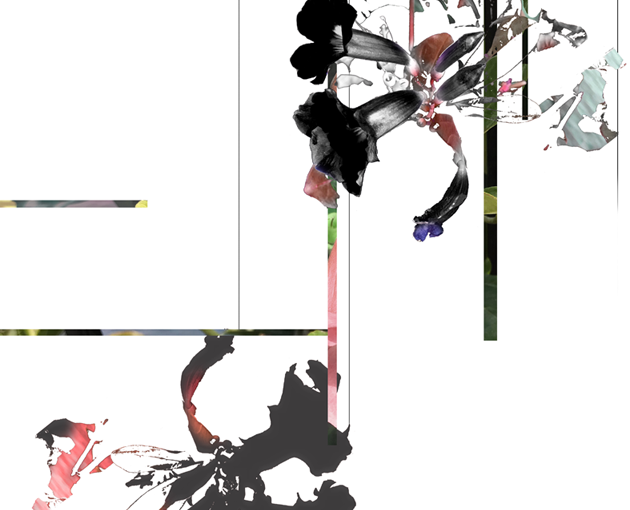
In this post, Ai Sato talks about the creation of her works.
In order to create my art:digital drawing, finding the objects that have the potential to be a subject of interest is an essential factor for me, so I have been archiving the photographs of everyday life here in Mexico. Most of the findings are very different, and often are rather unexpected from my point of view: the nature, color, landscape, and architecture. These scenery became one of the important factors to my works as the impression of these subjects are quite strong, and have a strong visual presence.
I took the screenshot of a couple of digital drawings that I am currently working on in order to explain one of the processes of how I create the digital drawing: First, I start off by adjusting the snap-shot photograph (*on the left bottom) from the screenshot image, rather spontaneously. Expanding the possibilities of the colors, tweaking the shapes and changing the composition in order to experiment the possibility from these mere ordinal photography. Gradually transforming the image to the one above it at some point.
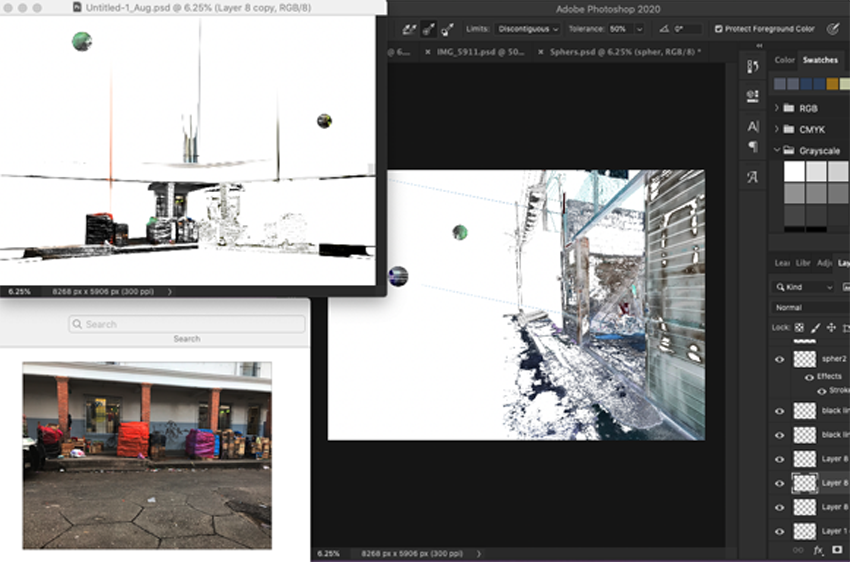
For this particular work, I started to become interested in creating “spheres”, which soon after I got the idea to “transfer” to the new “canvas”, because I found that there could be more possibilities in these objects to be a part of another drawing. To me, it is not so different to work with digital images with photoshop vs work physically with paint and canvas: “Randomness” is actually an important part of how I process making my art. Therefore, handling the colors on canvas, and handling the colors digitally work pretty fairly to me in order to achieve the visuals that I want to express.
I am also interested in creating moving images and video works with the same manner mentioned above. I am sharing one of the short video works I have recently created and experimented. One of my interests on this project is to expand the visual experiment, and playing with the possibilities beyond static images.
(*The photo in the screenshot was taken at the side street of central market, in San Cristobal de las Casas, Mexico, where I am currently residing. The short video footage was taken at Puerto Arista, on the north coast of Chiapas, Mexico in the municipality of Tonalá, combining with the other footage taken at home and garden.)
(*One of my recent digital drawing work, “Untitled”, was shown at Digital Arts Festival (ADAF), 16th international festival for digital arts, Athens, Greece, July-September 2020)

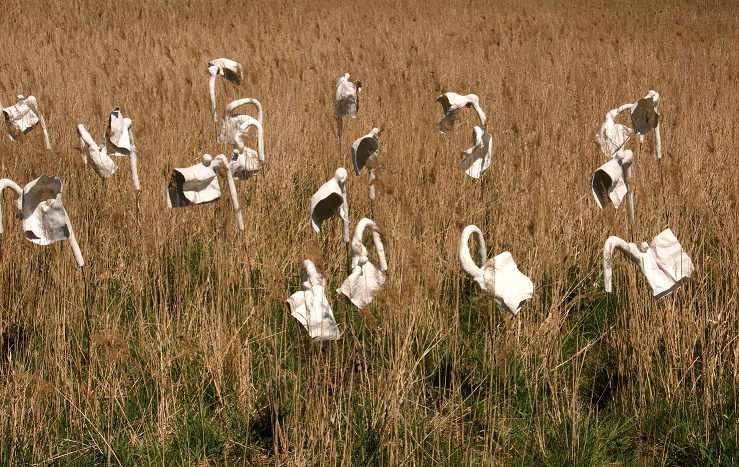
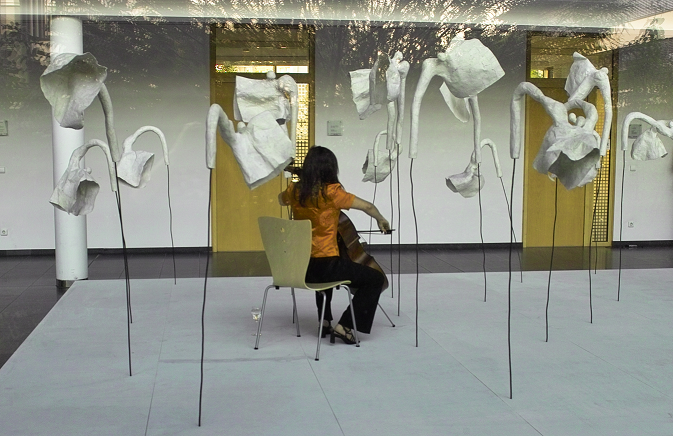
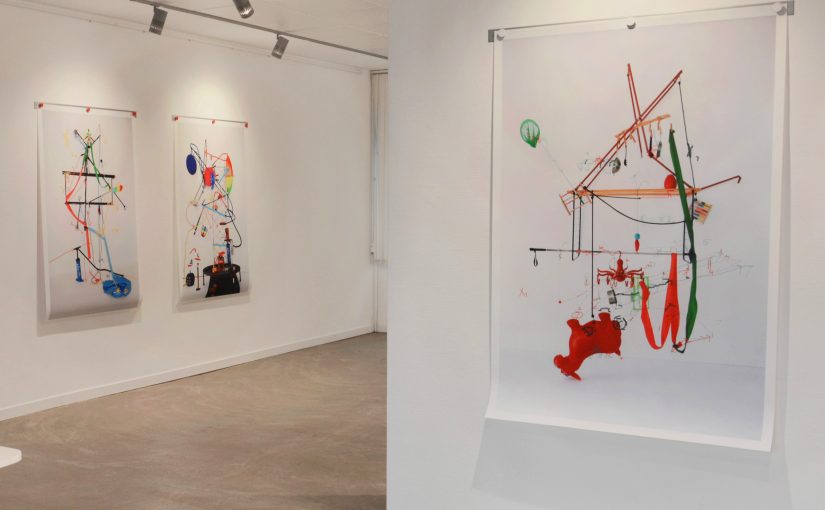
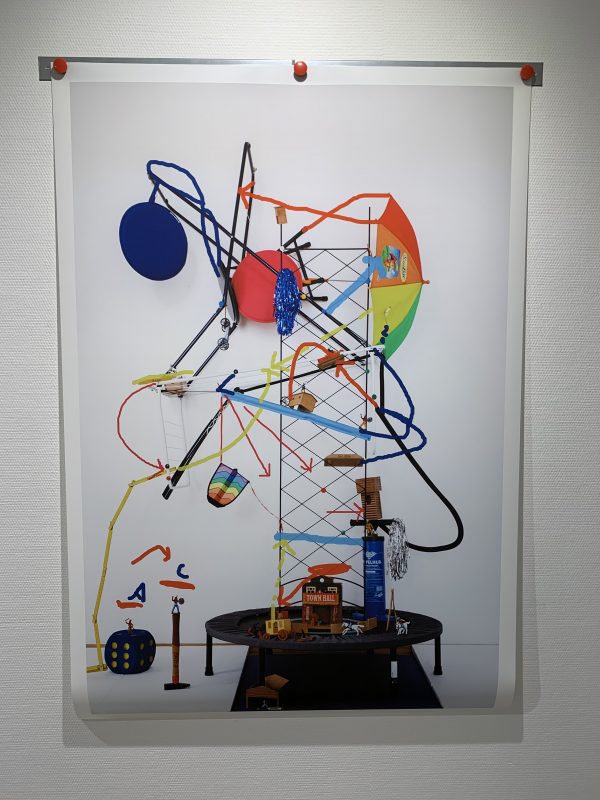
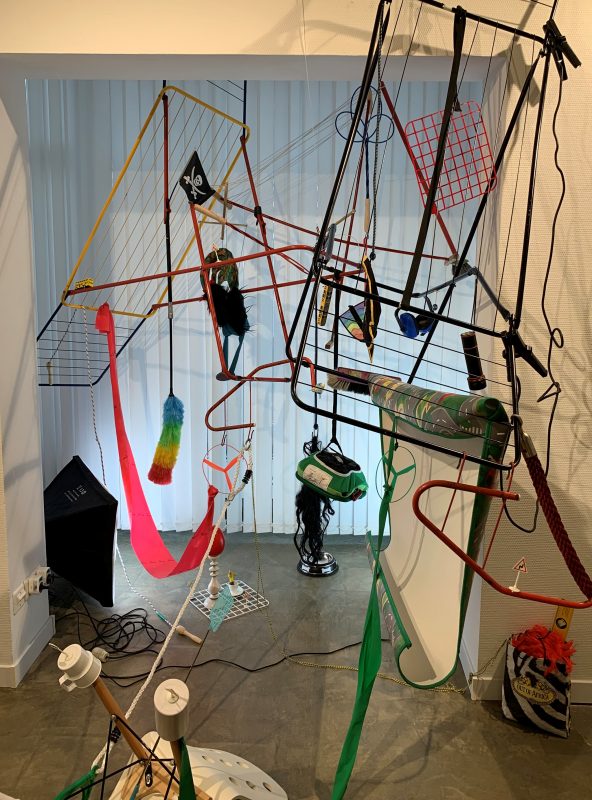 Susanne Britz has focused on photographs, pigment prints, and installations of everyday objects. The working process behind these works is exciting and is based on each other, so Susanne Britz runs through different phases during her creative process: it probably starts with an idea, then a spatial installation follows. Here she uses everyday objects from the household, sports equipment, tools from the studio or children’s toys. Once the installation is finished, she takes a photo of this work. Afterward, the photo gets digitally overdrawn.
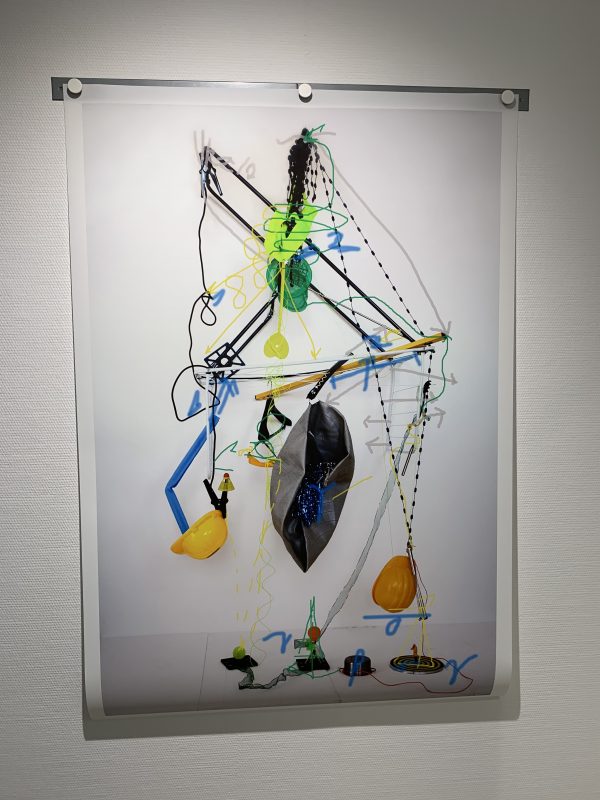 I like the strong colors and the general idea behind this artwork. It’ s funny to see all the things and to realize what you can do with everyday objects.
 #stayhome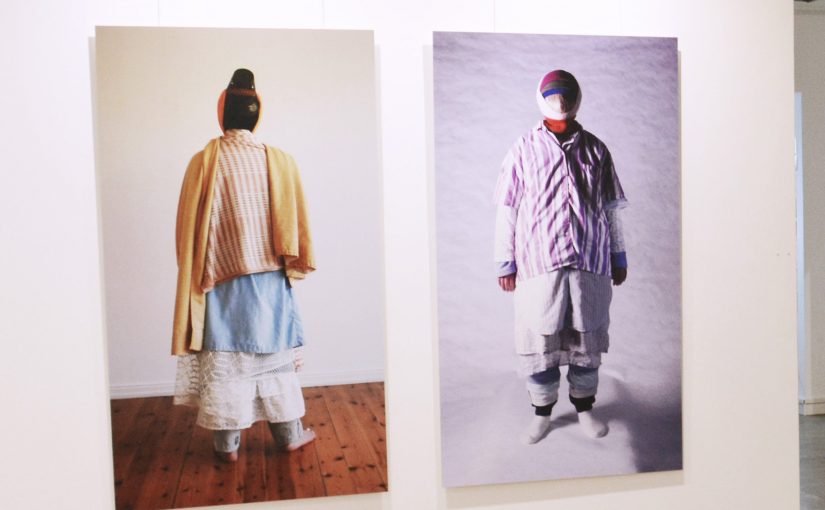
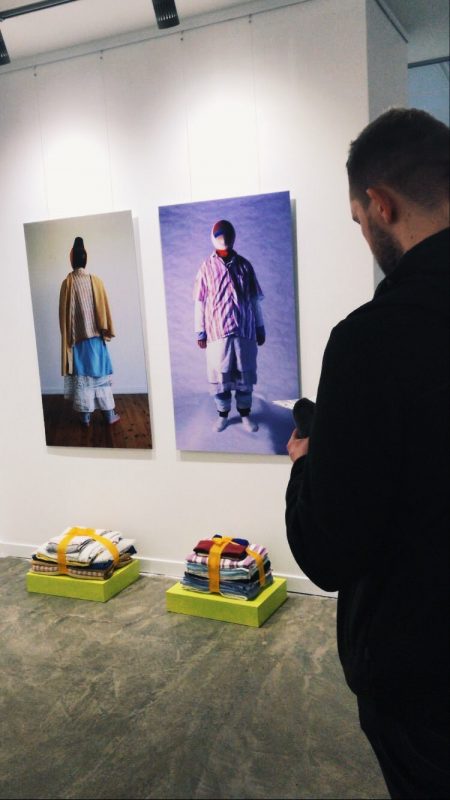 What do I see immediately? Two people wearing different textiles and always several of them. The textiles look like old towels, shirts, tablecloths or window curtains. In both pictures, the faces are covered. In my opinion, this gives the photographs anonymity and something mysterious.
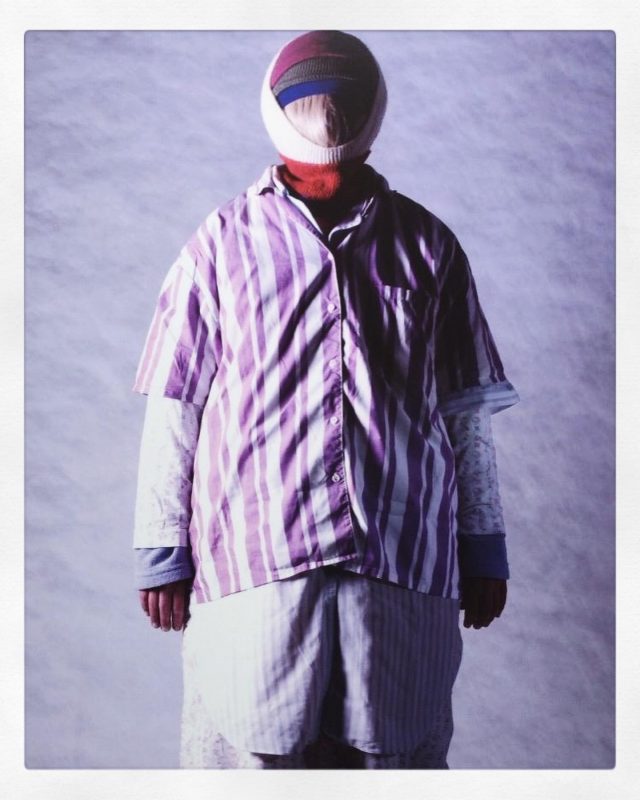 I take a look at the titles of the photographs. They are called “Strangers 1” and “Strangers 2”. The exhibition has the title “transformer” and the gallery manager Eva Hübner tells me that the textiles are garments. Clothes that were once worn by the artist’s mother and grandmother. Several generations are thus connected, quite inconspicuously. Thus the photos express the following for me: Even if some of them are no longer with us, we still carry them with us throughout our lives. They are a part of us.
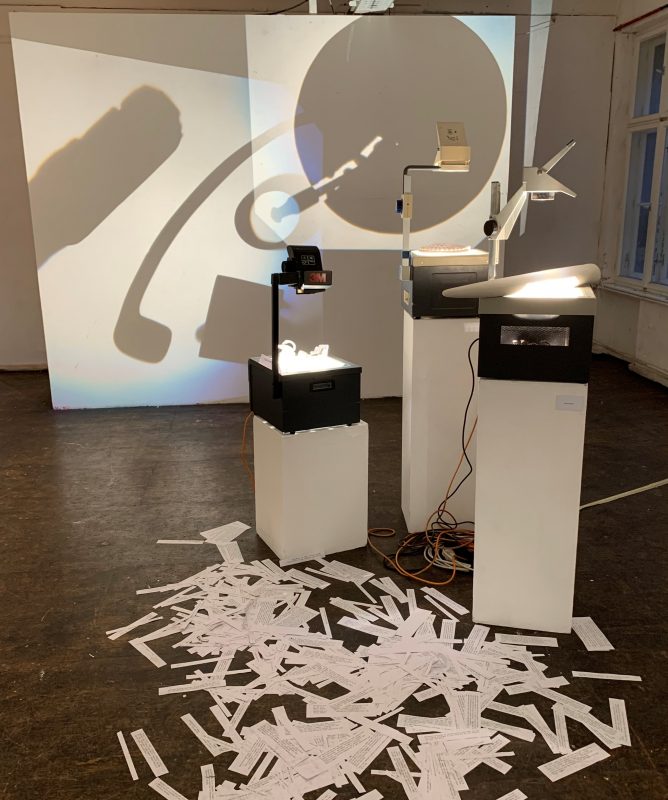 I’m in the house Schwarzenberg visiting the Neurotitan Gallery. First of all, I walk through the first large room to get into another, a little smaller one. In front of me, there are three overhead projectors. On top of them, white objects that at this point I can’t quite make out yet. I walk closer to the installation. Many small pieces of paper are spread on the floor. I stand directly in front of them and realize that different sentences are written on them. Questions, answers, quotations – it reminds me of a dialogue.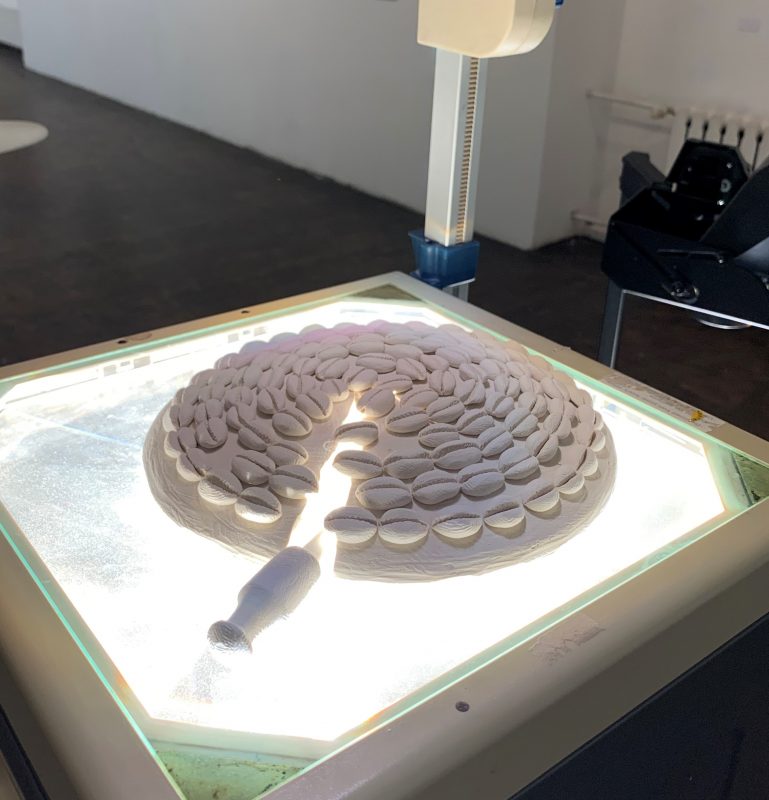
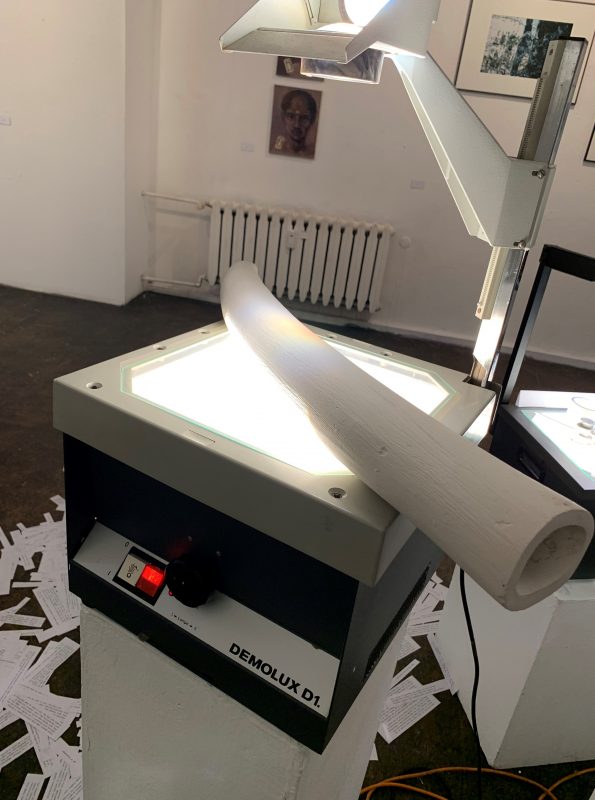 In the performance, the objects are also meant to become actors, a game with perspectives takes place: am I looking at the objects? Are the objects looking at me? Since overhead projectors were used in the Neurotitan Gallery for the first time (normally the objects were always at the eye level of the viewer), I have the feeling of “looking down from above” – which makes me feel more superior.